Winder vs Flared Stairs: Design and Modeling Tips for Stair Builders
By Earl Morgan · · 1 min read
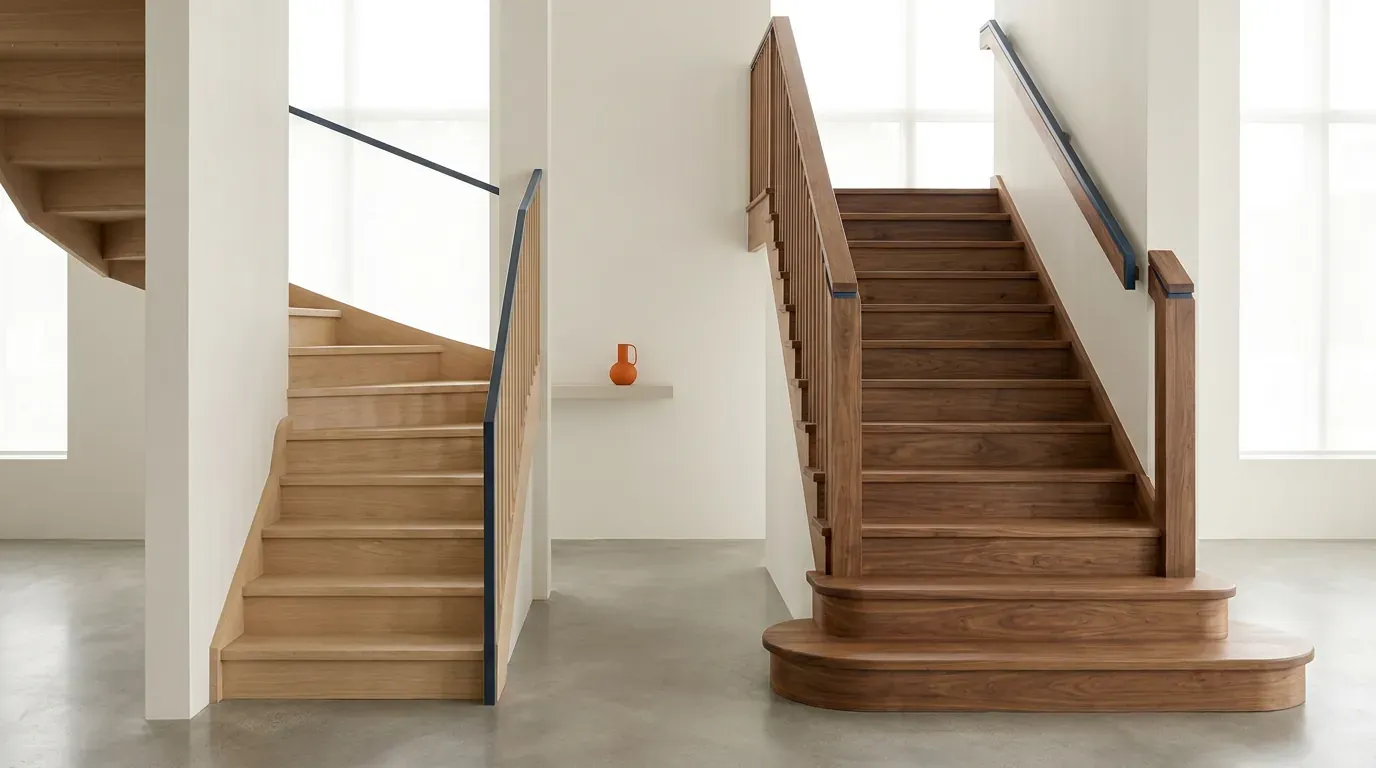
Winders and flares both change the width or direction of a flight, and both are where most stair layout mistakes happen.
Winders: turning in less space
Winders replace a landing with pie-shaped treads. Lay them out on the walk line first: the run there must match the straight treads, and the narrow end must still meet the code minimum.
Modeling tip: build winder treads from one parametric sketch driven by the walk-line radius. Change the radius and every tread, riser and stringer housing updates together.
Flared steps: a grand entrance
A flare widens the bottom steps, often ending in a bullnose or volute. Each change in width is a new subflight in our pricing, because each step has its own shape, riser bend and stringer intersection.
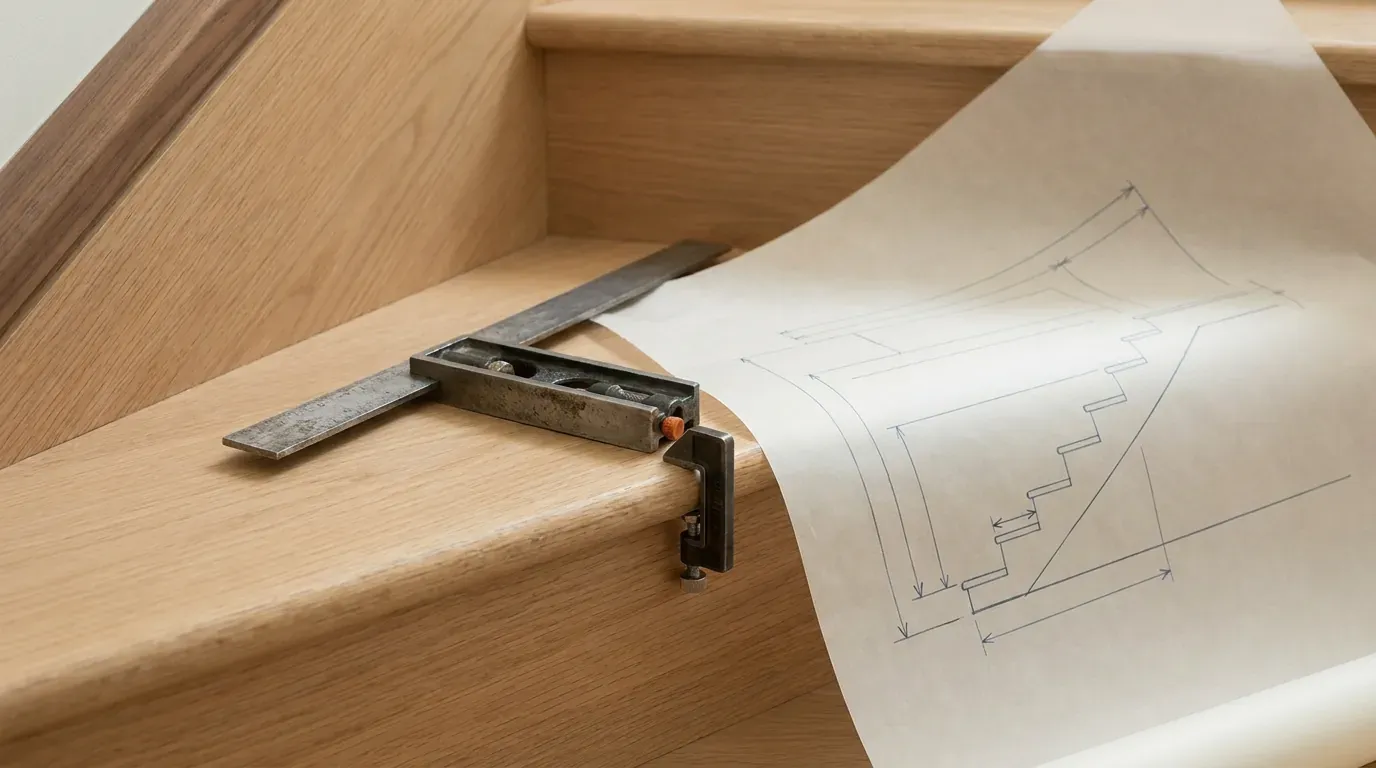
Modeling tip: draw the flare from the outside curve in. Bent risers need a developed (flattened) length, which the 3D model gives you exactly.
Which one to choose?
| Situation | Better choice |
|---|---|
| Tight footprint, need to turn | Winders |
| Open foyer, statement entrance | Flared steps |
| Accessibility-sensitive project | Landing instead of winders |
We model both every week. See stair shop drawings or stair design help.